El Levantamiento · version 02 · the concept at scale

A survey is a
service. A library
of them is a
business.

The first version of this sells a measurement. The version worth building sells the thing the measurement creates: a growing stock of difficult properties that have already been measured, costed and tested against the rules — and therefore a queue of decisions that can be made faster than anyone competing for the same buildings.

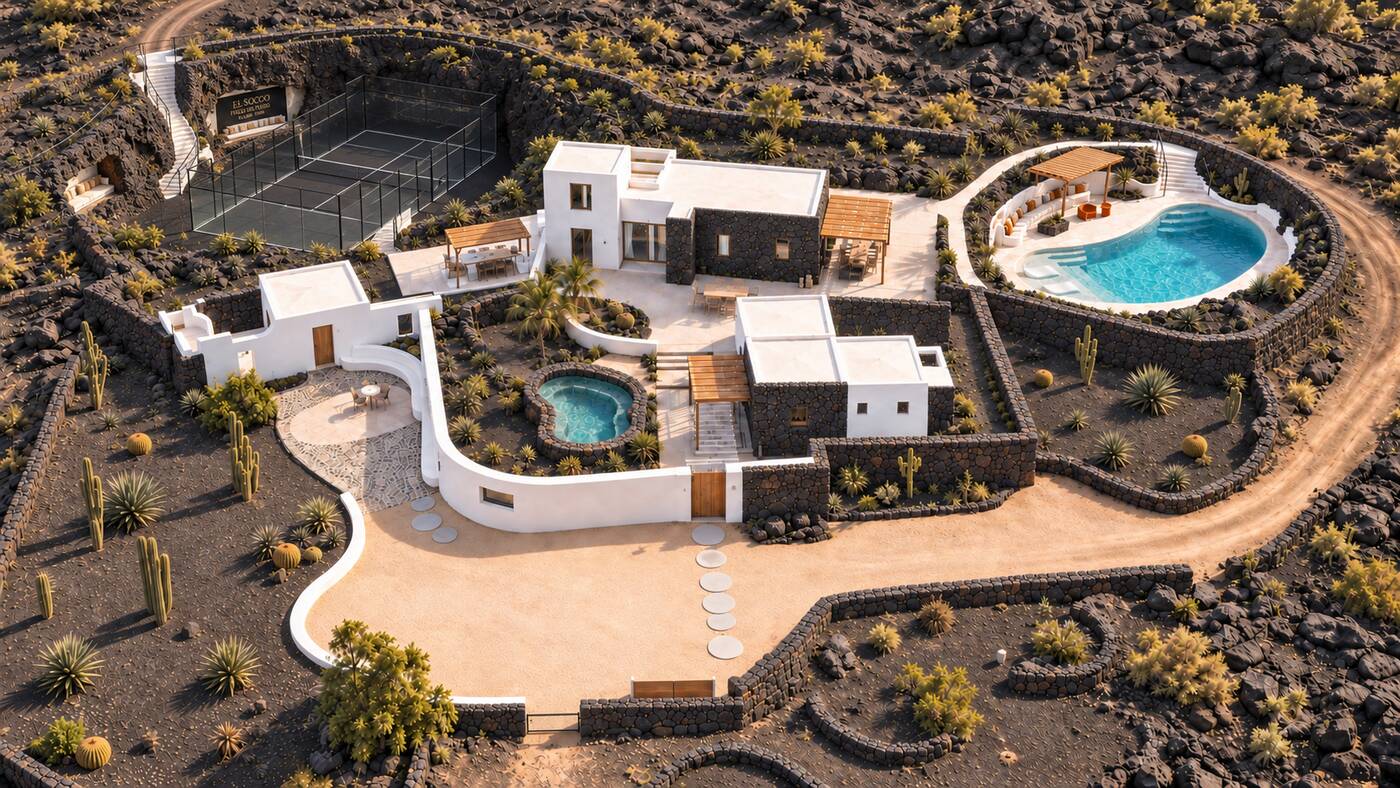
Aerial visualisation of the finished walled compound on black lapilli
One site, measured and resolved. The argument below is about the hundredth.
01 — La Tesis

The scarce thing is not the drone. It is the decision.

Drones are ordinary and photogrammetry is a commodity. Neither is defensible for long. What is scarce is the ability to look at a ruin on the other side of Europe and say, within two weeks and for the price of a flight, how many keys it holds, what it costs to build, how much rock has to move, and whether the municipality can be argued into it.

That is not a survey product. It is an underwriting product that happens to start with a survey. And underwriting compounds: every site run through it, including every site rejected, improves the cost model, the consent odds and the capture spec that the next one is judged by.

WHAT ONE SURVEY LEAVES BEHINDA site is flown30 MINUTES ON THE PLOTA measured asset existsCLOUD · MESH · ORTHO · VOLUMESThe site is underwritableKEYS, COST, CUT, CONSENT ODDSBid, pass, or option itA DECISION, NOT A FEELINGThe library growsEVERY PASS IS STILL AN ASSETThe next spec is sharperCAPTURE AND MODEL IMPROVEA site you walk away from still pays: the pass is a data point, and the spec that captured it gets better.
Why it compoundsA survey that ends in “no” is not a wasted survey. The measurement, the cost model it fed and the capture spec that produced it all persist — which is the difference between a service and an origination engine.
02 — Los Escenarios

Five ways this pays, in increasing order of ambition.

They are not alternatives. Each one is available only because the one before it is running, and each is a larger share of a larger number. The first is a fee. The last is a standard.

Scenario A · available now

The survey as a service

Sell the flight instruction, the twin and the fit report per site, to developers and buyers looking at difficult rural property anywhere in Europe. Straightforward B2B work with a clear deliverable and a short cycle.

It funds the apparatus and buys the reference cases. It does not, on its own, ever become large — the fee is bounded by what a due-diligence line item is worth.

SellsA report
Scenario B · already implicit

Origination for our own book

Fly sites we might buy. The survey cost becomes deal cost, and the output is effectively a cheap option on a property: the right to know, before committing, what almost no other bidder knows.

The advantage is speed and nerve. In a market where good ruins go to whoever can decide fastest, two weeks of certainty is worth more than a discount.

SellsNothing — it buys better
Scenario C · the compounding one

The library

Every site flown stays in a catalogue: measured, costed, scored against the same standard, with its consent argument sketched. Over time that becomes a stock of pre-underwritten opportunities in the categories nobody else can screen cheaply — protected landscapes, heritage ruins, difficult terrain.

Licensed to developers, syndicated to investors, or simply used to pick. The cost of building it was already paid by scenarios A and B.

SellsAccess to a queue
Scenario D · the defensible one

Consent as the product

The hardest thing about building in a protected landscape is not building. It is proving in advance, to a planning authority, that what you intend will not be seen, will not break the envelope, and will not disturb the ground more than stated.

That evidence file — measurement plus visualisation plus volumes, in a form a municipality accepts — is the least copyable part of the whole method, and the part with the least competition.

SellsA permission argument
Scenario E · the ten-year one

The standard the estates are replicated on

El Soco is a format, not a building: a walled compound, three to five lettable keys, a pool, a serviced court, no neighbour. Replication has always been limited by the same thing — finding and validating the next site without burning a year on each candidate.

Run the method at volume and that constraint moves. The survey stops being a service sold to other people and becomes the pipeline that decides where the second, fifth and twelfth estate go. At that point the measurement business and the development business are the same business, and the first one exists to feed the second.
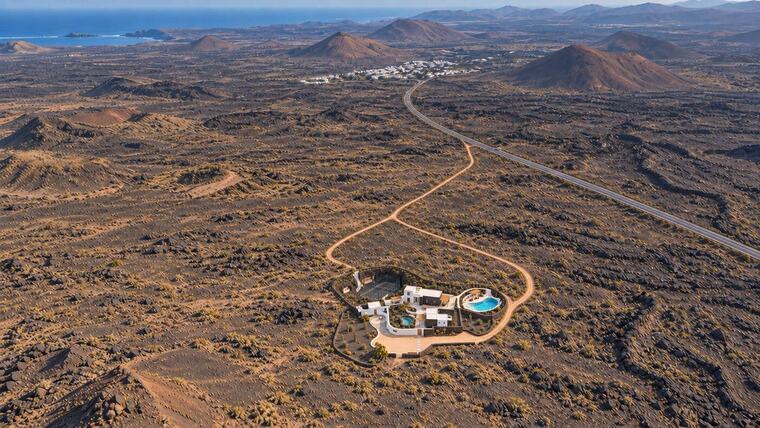
SellsEstates · the method is the moat
03 — Las Condiciones

What has to be true before any of that is real.

Scale is not a matter of doing the same thing more often. Four things have to change from bespoke to standard, and each one is a decision rather than a discovery.

01

A capture anyone can run

The spec has to be followable by an estate agent with a phone and a drone. Every hour a specialist has to be present is an hour the model does not scale.

02

A pipeline that is not hand-held

Images in, standard deliverable set out, with the accuracy statement generated rather than written. Human time moves to the fusion, which is the part worth paying for.

03

One scoring standard

Keys, cost, cut, consent odds, exit — computed the same way on every site, or the library is a folder of unrelated reports rather than a comparable stock.

04

A legal wrapper per country

Airspace, protected-area rules, what a non-certified survey may be used for, and who carries the liability. This is the real brake on geography, not the technology.

04 — El Camino

The shape of it, if each step earns the next.

Deliberately unfunded and deliberately slow at the start. Nothing here requires a raise to begin; the first two stages are paid for by work already happening.

Now

One site, proven end to end

Finca del Fuego flown with ground control, the full deliverable set produced, the fit and volume report used in a real planning conversation. The case study becomes the sales material.

+1

A second site that is not ours

One external client, at cost or near it, to find everything the calibration case hid. The capture spec and the deliverable template come out of this stage fixed.

+2

The service runs

Scenario A as ordinary work, several sites a quarter, the partnership agreement in place. Every site also lands in the library — that discipline starts here or it never starts.

+3 — 5

The library has weight

Enough measured, scored candidates across the Canaries and the Mediterranean rim that a site selection question can be answered from a table rather than a search. Scenario B and C become the same motion.

+5 — 10

Estates on pre-validated sites

The second and third El Soco estates chosen from the library rather than found by chance, each one consented on evidence produced by the method it was chosen with.

05 — Lo Honesto

What is assumption, and what is fact.

The method is real and being run. Everything on this page about volume, geography and the library is a construction — a reasoned one, but a construction. It is written down so it can be argued with rather than absorbed.

Fact — the process works and is being calibrated on a live project. The partner exists and is doing the processing. The drone class, the regulation and the photogrammetry are all ordinary, available technology.

Assumption — that enough buyers of difficult property will pay for certainty at this stage; that the consent evidence carries the weight with municipalities that we believe it does; that the library retains value rather than going stale; and that one partnership can cover the jurisdictions the geography implies.

Unknown — what a survey is worth to a third party, which is a price nobody has tested, and how quickly the extraction and fusion steps commoditise once someone else builds them.